FRONT YARD OF THE MAIN HOUSE WITH SERVANT QUARTERS BY THE SIDE AT THE END OF THE LONG DRIVEWAY. SOME PHOTOS AND VIDEOS ON THIS SITE, I DO NOT OWN. HOWEVER, I HAVE NO INTENTION IN INFRINGING ON YOUR COPYRIGHTS.

Sunday, October 10, 2021

Presenting Leif-Ditas Companion and Walking Partner

Ditas and Leif visits me regularly. Leif is Ditas Pet Dog. Every time Leif sees me he would jump with joy and excitement. Ditas has to restraint him often, otherwise he would leak me till doomsday. Leif had graduated from a 21-Day Obedience training school for Dogs. Here's Leif during their recent visit.


Leif- Ditas Companion and Walking Partner- Your Pet dogs can provide:

Unconditional love, devoted companionship and constant entertainment. 

Most of dog lovers know that life is better with a dog. But is that knowledge based on a feeling—or is there something else at work? There is: Science.

Spending time with canine companions does wonders for your well being. Recent research shows that owning a dog is good for you physically and emotionally. Dogs make us happier, healthier, and help us cope with a crisis—and can even help you get a date. Curious? Read on for 10 science-backed benefits of having a dog in this site. Here are five benefits of dogs as pets.

1. Dogs make us feel less alone.

Dogs can be there for you even when people can’t. They offer unconditional love, emotional support, and constant cuddles that help stave off social isolation. A small Australian study discovered that dog ownership reduces loneliness.

A national survey of pet owners and non-pet owners by the Human Animal Bond Research Institute found that 85 percent of respondents believe that interaction with pets reduces loneliness. Most agree that human-pet interactions can help address social isolation.

2. Dogs are good for your heart.

Owning a dog can help you live longer. A comprehensive review of studies published between 1950 and 2019 found that dog owners had a lower risk of death. Studies suggest that dog owners have lower blood pressure levels and improved responses to stress.

Even just living with a dog makes a difference—people who had experienced previous coronary events had an even higher level of risk reduction for death. Research has concluded that the bond between humans and dogs reduces stress, which is a major cause of cardiovascular problems.

3. Dogs help you stop stressing out.

Your canine companion can offer comfort and ease your worries. Multiple studies show that dogs and therapy dogs help alleviate stress and anxiety.

Even just petting a familiar dog lowers blood pressure, heart rate, slows breathing, and relaxes muscle tension. Scientists at Washington State University discovered that just 10 minutes petting a dog can have a significant impact. Study participants had a significant reduction in cortisol, a major stress hormone.

4. Dogs help us cope with crisis

Dogs help us recover psychologically from a crisis. Purdue University’s College of Veterinary Medicine discovered that military veterans with PTSD do better both physiologically and psychologically when they have a service dog. Veterans with a service dog had significantly fewer symptoms of PTSD and showed improved coping skills.

5. Dogs encourage you to move.

Those long treks along sidewalks, trails, and paths add up. A 2019 British study discovered that dog owners are nearly four times more likely than non-dog owners to meet daily physical activity guidelines. Dog owners spend nearly 300 minutes every week walking with their dogs. That’s 200 more minutes walking than people without a pup of their own.

For the remaining six benefits read the following:

 https://www.akc.org/expert-advice/lifestyle/10-science-based-benefits-dog/

Meanwhile enjoy this video on the basics of dog obedience training
The David B Katague Family have owned a number of pet dogs and cats since the 1960's. Among the pets that I will always remember are: Miko-a male Brown Pure Bred Chow Chow, Ling-ling a female black pure bred Chow Chow, Devil- a white German Shepherd and Kahlua a brown cuddling and loving house cat.


Friday, October 8, 2021

The Two Articles I Enjoyed Writing Most for the StoryWorth Book

I have published more than 7500 articles in my blog since 2008. But two of the articles I really enjoyed writing are: The Ylang-Ylang Tree and its Essential Oils and Funny and Sexy Names of Places in the World . Here is an update of the first article I titled "The Best Smell of My Life".


Ylang-Ylang flowers in my backyard, Chateau Du Mer, Marinduque, Philippines

This article was inspired by a question of a friend in Facebook-regarding the best smell one has experienced.  Mine is the smell of the blooming Ylang-Ylang trees in my garden at Chateau Du Mer, Boac, Marinduque, Philippines. I have two big mature trees in the backyard of Chateau Du Mer that are about 19 years old.

When the trees are in bloom, you can smell the fragrance of it flowers to as far as 50 meters and even farther if the wind direction is favorable. It is one fragrance, that I will never forget at Chateau Du Mer in Marinduque. Its reminds me of the perfume, Channel No.5.

The fragrance of ylang-ylang is rich and deep with notes of rubber and custard, and bright with hints of jasmine and neroli. The essential oil of the flower is obtained through steam distillation of the flowers and separated into different grades (extra; 1; 2; 3) according to when the distillates are obtained. The main aromatic components of ylang-ylang oil are benzyl acetate, linalool, p-cresyl methyl ether, and methyl benzoate, responsible for its characteristic odor.

On the subject of Ylang Ylang Oil, I am proud to inform readers of this blog that my Master’s degree thesis was the Analysis of the Volatile Constituents of Ylang Ylang Oil by Gas Chromatography. This was published in the

Journal of Pharmaceutical Chemistry, Vol.52, No.3 252-258 dated March, 1963.

I believe not too many non-Filipinos have heard of this tree and it fragrant flowers. Here’s a short information from Wikipedia for your reading pleasure.

Cananga odorata, commonly called Ylang-ylang (pronounced /ˈiːlæŋ ˈiːlæŋ/, EE-lang-EE-lang), cananga tree, ilang-ilang, kenanga (Indonesian), fragrant cananga, Macassar-oil plant or perfume tree), is a tree valued for its perfume. The essential oil derived from the flowers is used in aromatherapy and in the manufacture of perfumes.

Cananga odorata is a fast-growing tree of the custard-apple family, Annonaceae, that exceeds 5 m (15 ft) per year and attains an average height of 12 m (40 ft). It grows in full or partial sun, and prefers the acidic soils of its native rain forest habitat. The evergreen leaves are smooth and glossy, oval, pointed, with wavy margins, and 13–20 cm (5–8 in) long. The flower is drooping, long-stalked, with six narrow greenish yellow (rarely pink) petals, rather like a sea star in appearance, and yields a highly fragrant essential oil.

The Chemical Composition Typical chemical compositions of the various grades of Ylang ylang are reported as follows:

Constituents Linalool, geranyl acetate, caryophyllene, p-cresyl, methyl ether, methyl benzoate, other, sesquiterpenes.

The name ylang-ylang is derived from Tagalog, either from the word ilang, meaning “wilderness”, alluding to its natural habitat, or the word ilang-ilan, meaning “rare”, suggestive of its exceptionally delicate scent. A more widely accepted translation is “flower of flowers”. The plant is native to the Philippines and Indonesia and is commonly grown in Polynesia, Melanesia and Micronesia.

The essential oil of ylang-ylang is used in aromatherapy. It is believed to relieve high blood pressure, normalize sebum secretion for skin problems, and is considered to be an aphrodisiac. According to Margaret Mead, it was used as such by South Pacific natives such as the Solomons where she did much of her research. The oil from ylang-ylang is widely used in perfumery for oriental or floral themed perfumes (like Chanel No. 5). Ylang-ylang blends well with most floral, fruit and wood smells.

In Indonesia, ylang-ylang flowers are spread on the bed of newlywed couples. In the Philippines, its flowers, together with the flowers of the sampaguita, are strung into a necklace (lei) and worn by women and used to adorn religious images.
 
Meanwhile Note: The fragrance of Ylang Ylang was mentioned in one of the Episodes of the widely popular Netflix TV series, Emily in Paris. The supporting actress in this series is named Philippine Leroy Beaulieu. This is the first time I heard of a person/actress named Philippine. Her Father's name is Philippe, another French actor. I recommend this series if you like a light  comedy-drama.   
 
Here's my second article for your reading pleasure. 

While surfing the web, I found the following names unusual, sexy and funny. There is no particular order in the list. I also listed two places that are both surnames of my father and mother from the Philippines.

With regards to my wife's mother surname, NIEVA, there is a street named NIEVA in Makati, Philippines and a bridge, named NIEVA in Gasan, Marinduque, Philippines.

Sexy Names Indeed!

Sexmoan ( changed to Sasmuan in 1990), Pampanga, Philippines
Tinurian, Iloilo, Philippines ( it means a place for circumcision)
Landi, Santa Cruz, Marinduque, Philippines ( Landi' could mean flirt or whore)
Condom, Gers, France
Fucking, Austria
Bra, Italy
Pussy, France
Cockplay, Scotland
Agay, France
Pennis Wood, UK
 

Three Cocks, Wales
Blowhard, Australia
Dikshit, India
Titless, Switzerland
Long Dong, Guangxi, China
Weener, Germany
Cocktown, Wexford, Ireland
Onacock, Virginia, USA
Seman, Alabama, USA


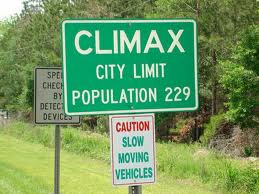
Climax, Georgia, USA

More Unusual Names
Paradise, California, USA
Cool, California, USA
Manila, California, USA
Earth, Texas, USA
Jackpot, Nevada, USA
 

Truth or Consequence, New Mexico, USA
Happy, Texas, USA
New York, Cubao City, Philippines
San Francisco, Agusan del Sur, Philippines
Mexico, Pampanga, Philippines
Chocolate Hills, Bohol, Philippines

Personal Connections

Catague, Bohol, Philippines
 

Catague is my fathers' surname. When he was in high school he changed it to Katague. Catague is a small town in Central Bohol, near the town of Sevilla. Any one knows the origin of the Catague name in Bohol, please let me know.

Balleza, Chihuahua, Mexico ( Balleza is my mother's maiden name)

Balleza is a town in Northern Mexico in the province of Chihuahua. The town is named after Fr. Mariano Balleza, a priest from Bilbao, Spain.


Meanwhile, enjoy this photo of a dozen roses, a gift during Macrine's Waksi the other day from relatives originally from the Philippines


Wednesday, October 6, 2021

Stigma to People with Mental Illness in the Philippines Versus the United States


Stigma towards people with mental illnesses in the Philippines is rampant. There is a lack of sensitivity in referencing to mental health issues. Many forms and attitudes of stigma affect people with mental illnesses. However, there are differences in stigmatizing attitudes and discriminatory behaviors in the Philippines versus the US. Stigma are evident at home, school, workplace and in healthcare settings in both countries.

The Philippines, like most countries of the Western Pacific region, have a national mental health policy. However, in comparison to other countries, it was put into operation relatively recently. Community care for patients is available but limited mostly in big cities.

When I was in college in the Philippines, the topic of mental illness is taboo and not a favorite topic for conversation.  If discuss at all it is in whispers. I remember during my engagement and pre-marriage talks, my future wife families ask me If I have closed relatives that are mentally ill.  My answer was negative. I had feeling though that if my response was positive, our marriage plans will have been aborted.

One of the popular beliefs in the Philippines during my college years is that depression and anxiety are non-existent, and that mental illnesses are something to be ashamed of.  A qualitative study conducted by Tanaka et al. (2018) showed that this stigma is considered to be an effect of the public belief about mental disorders which consist of three themes:

First is familial problems, wherein the family rejects or disowns the family member who suffers from a mental disorder because they believe that it can be inherited. 

Second is unrealistic pessimism and optimism about the severity of the disorder, wherein the mentally ill either would certainly suffer from severe functional impairment or would be able to overcome any psychological suffering by themselves. 

Last is the oversimplified chronic course, wherein people without mental illnesses apply an acute illness model to those ill, and expect full recovery in the short term. For complete details on the status of mental health in the Philippines visit this site:

https://www.frontiersin.org/articles/10.3389/fpsyg.2021.706483/full

On the other hand an article on the Status of Mental Health in the US from the American Psychological Association published on May 2019 concluded that: 

Most Americans harbor positive views about mental health disorders and treatment (according to the results of a survey conducted by The Harris Poll on behalf of the American Psychological Association).

A total of 87% of American adults agreed that having a mental health disorder is nothing to be ashamed of, and 86% said they believe that people with mental health disorders can get better.  For complete details visit:

https://www.apa.org/news/press/releases/2019/05/mental-health-survey 

However, A 2019 national poll from the American Psychiatric Association (APA) found that mental health stigma is still a major challenge in the workplace. About half of workers were concerned about discussing mental health issues at their jobs. More than one in three were concerned about retaliation or being fired if they sought mental health care.

Only about only about one in five workers were completely comfortable talking about mental health issues. The poll found a generational divide: millennials were almost twice as likely as baby boomers to be comfortable (62% vs. 32%) discussing their mental health.

On a more positive note, about half of workers were at least somewhat comfortable talking about mental health and most workers said they would help guide a troubled co-worker to mental health resources. However, even among those willing to help, about one in four workers said they would not know where to turn for mental health help. For complete details on stigma and discrimination in the work place visit:

https://www.psychiatry.org/patients-families/stigma-and-discrimination

Finally on the Impact pf Covid-19 on Mental Health 

This year’s report includes a spotlight on the impact of COVID-19 on mental health, using the over 1.5 million people who have taken a screen on MHA Screening from January to September 2020. From these screens we have found:

  • The number of people looking for help with anxiety and depression has skyrocketed. From January to September 2020, 315,220 people took the anxiety screen, a 93 percent increase over the 2019 total number of anxiety screens. 534,784 people took the depression screen, a 62 percent increase over the 2019 total number of depression screens.
  • The number of people screening with moderate to severe symptoms of depression and anxiety has continued to increase throughout 2020 and remains higher than rates prior to COVID-19. In September 2020, the rate of moderate to severe anxiety peaked, with over 8 in 10 people who took an anxiety screen scoring with moderate to severe symptoms. Over 8 in 10 people who took a depression screen have scored with symptoms of moderate to severe depression consistently since the beginning of the pandemic in March 2020.
  • More people are reporting frequent thoughts of suicide and self-harm than have ever been recorded in the MHA Screening program since its launch in 2014. Since the COVID-19 pandemic began to spread rapidly in March 2020, over 178,000 people have reported frequent suicidal ideation. 37 percent of people reported having thoughts of suicide more than half or nearly every day in September 2020.
  • Young people are struggling most with their mental health. The proportion of youth ages 11-17 who accessed screening was 9 percent higher than the average in 2019. Not only are the number of youth searching for help with their mental health increasing, but throughout the COVID-19 pandemic youth ages 11-17 have been more likely than any other age group to score for moderate to severe symptoms of anxiety and depression.
  • Rates of suicidal ideation are highest among youth, especially LGBTQ+ youth. In September 2020, over half of 11-17-year-olds reported having thoughts of suicide or self-harm more than half or nearly every day of the previous two weeks. From January to September 2020, 77,470 youth reported experiencing frequent suicidal ideation, including 27,980 LGBTQ+ youth.
  • People screening at risk for mental health conditions are struggling most with loneliness or isolation. From April to September 2020, among people who screened with moderate to severe symptoms of anxiety or depression, 70 percent reported that one of the top three things contributing to their mental health concerns was loneliness or isolation.
  • People who identify as Asian or Pacific Islander are searching for mental health resources more in 2020 than ever before. The proportion of screeners identifying as Asian or Pacific Islander increased 7 percent, from 9 percent of screeners in 2019 to 16 percent in 2020.
  • While rates of anxiety, depression, and suicidal ideation are increasing for people of all races and ethnicities, there are notable differences in those changes over time. Black or African American screeners have had the highest average percent change over time for anxiety and depression, while Native American or American Indian screeners have had the highest average percent change over time for suicidal ideation.

For complete details visit:https://mhanational.org/issues/state-mental-health-america

Do you find this article informative? Do you have a relative or a friend that suffers from anxiety and/or depression? What is your personal feelings about mental illness? I will be glad to hear from you via comments. 

Today News from the New York Times:

Depression and anxiety fell in early 2021 but have been more common during the pandemic than before it, the C.D.C. reports.


Monday, October 4, 2021

Senior Citizens Living Alone and Me

Leif and Me-Am I watching TV? Yes, just closing my eyes for a Minute! Leif is Ditas Pet and Loving and Energetic Companion. 

According to a recent Pew Research about 12 million senior citizens ( 65 and older) live alone. They reside in their own homes, in assisted-living facilities or nursing homes. Most of these Seniors do not get regular visits from relatives and friends. Others have caregivers and help from relatives nearby. I could identify with these Senior Americans, although I do not live alone. My youngest son lives with me. He still works full time in a night shift, so I seldom see him. Sometimes, I feel I am living alone. However, I have one relative who visits me regularly and bring food and conversation that I welcome and treasured. Another relative calls me by phone or FB messages once a month. I have another relative that I see once or twice a year. 

Last but not least, Macrine (RIP) has relative that lives nearby.  She and her family have visited me bringing food several times during the last 6 months. I will not mentioned names, but you know who you are. I am indeed grateful for these visits. I feel very blessed in my aging years for these caring relatives and again thank you ALL. It is not good to be alone. Loneliness and isolation is not good for your mental health.

This weekend I feel very happy during the regular weekly visit of Ditas and Leif. Ditas brought a Big Roasted Chicken wrapped in Bacon and other goodies. 


The following photo show Leif and me, while we were watching a TV show after dinner, Ordinary Joe at HULU.  

Here's an article from the American Psychological Association (APA) on the current status of these 12 million Senior Americans for your information and reading pleasure.

12 million

The number of Americans over age 65 who live alone, according to a report by the Pew Research Center. The percentage of older adults who live alone quintupled from 6 percent in 1900 to a peak of 29 percent in 1990, and has slowly declined since then, to 26 percent in 2014.

69 percent

The percentage of those older adults who are women. In 1990, women made up a greater share of older adults living alone (79 percent). But since then, the percentage of older women living alone has decreased from 38 percent to 32 percent, while the percentage of older men living alone has risen slightly from 15 percent to 18 percent.

1/3

The share of older adults living alone who say they are financially comfortable. In contrast, nearly half of those who live with others say they are able to live comfortably. Twelve percent of those living alone say they don't even have enough money to meet basic expenses, compared with 5 percent of those who live with others.

48 percent

The percentage of older men living alone who say that they are "very satisfied" with the number of friends they have, compared with 62 percent of men who live with others. In contrast, women who live alone are slightly more likely to be satisfied with their number of friendships (71 percent) than women who live with others (67 percent).

61 percent

The percentage of older adults who would prefer to age in their own home, with a caregiver, according a to a Pew survey. Seventeen percent would prefer to move to an assisted living facility, 8 percent would prefer to move in with family and 4 percent would prefer to move to a nursing home.

Source: https://www.apa.org/monitor/2016/05/numbers

Meanwhile enjoy this photo from my recent hard bound book, Life Memories, Becoming Americans published by StoryWorth.


Finally:

From Yesterday New York Times: A recent study from the Center for Retirement Research at Boston College found that 38 percent of 65-year-olds will develop moderate needs, almost one-quarter will have severe needs, 22 percent will have minimal needs and 17 percent will have no care needs.

Many older adults don’t have enough money saved. But others scrimp too much, lowering their quality of life. I hope you are in the group that is aging gracefully!


Friday, October 1, 2021

My Favorite Two Jokes for the StoryWorth Book of Memories

Here's my response to the query about my two favorite jokes for StoryWorth Book. My Book I titled Becoming Americans was just published into a hard-bound 435 pages with 100 B & W photographs just recently. I am very pleased with how the book turned out.


Si Malakas at Maganda- The first Pinoy couple( The Strong and the Beautiful)

This is my own English translation of the origin of the Filipino race. It is a story based on children's folklore written in the local dialect of the Philippines.

In 1972, after I received my US citizenship, I was invited by our Local Lions Club as a guest speaker during one of their monthly meetings. They requested that I talk about the Japanese-American War in the Philippines. This subject is one chapter in my autobiography, so I was confident about the content of my talk. However, I had no experience in public speaking, but had taken a speech class in college. Our speech teacher once said that before your speech, you have to put your audience at ease, so always tell a joke that is related to the subject of your talk. The following is the joke I told the group: The Origin of the Filipino Race.

Evidently, when God created mankind, he molded the human form using clay and an oven. The first time, he was doing this, God was so excited that he took what he was baking too soon. The human clay was under cooked or underdone. So it was pale and white. That was the origin of the White Race.

God was not happy, so he started to bake another human form. This time he got a telephone call from Satan. God was upset he forgot about what he was doing and the baking was over done, the human form was overcooked, and turned black. This was the origin of the Black Race. 

God then told himself, “This time it will be perfect. I will watch it very carefully and will not be distracted by any calls.” His baking was perfect. The human form was golden brown, and perfectly cooked. This was the origin of the Filipino race.

Note: The original form of the above story was from children’s folklore in the local dialect (Ilonggo or Hiligaynon) in the Philippines. The above article is my own English translation of the folklore. I hope it brightens your day! Needless to say, my talk was a success!

 ***************************************************************************

And here's the second article/joke for StoryWorth Book.  Enjoy and be sure to smile!
 
There were 3 good arguments that Jesus was Black: 1. He called everyone brother. 2. He liked Gospel. 3. He didn't get a fair trial.
 
But then there were 3 equally good arguments that Jesus was Jewish: 1. He went into His Father's business. 2. He lived at home until he was 33. 3. He was sure his Mother was a virgin, and his Mother was sure He was God. 
 
But then there were 3 equally good arguments that Jesus was Italian: 1. He talked with His hands. 2. He had wine with His meals. 3. He used olive oil.
 
But then there were 3 equally good arguments that Jesus was a Californian: 1. He never cut His hair. 2. He walked around barefoot all the time. 3. He started a new religion. 
 
But then there were 3 equally good arguments that Jesus was an American Indian: 1. He was at peace with nature. 2. He ate a lot of fish. 3. He talked about the Great Spirit.
 
But then there were 3 equally good arguments that Jesus was Irish: 1. He never got married. 2. He was always telling stories. 3. He loved green pastures. 
 
But the most compelling evidence of all - 3 proofs that Jesus was a Woman: 1. He fed a crowd at a moment's notice when there was virtually no food. 2. He kept trying to get a message across to a bunch of men who just didn't get it. 3. And even when He was dead, He had to get up because there was still work to do. ________________
My Response to the Message in FaceBook:
Like it. How about a list that Jesus was a Filipino?
 
Photo Credit: NY Daily News

Can you write three proofs that Jesus could have been a Filipino ( not seriously, of course) . Here's mine
 
1. He ate with his hands. 2. He kiss his relatives on the cheek upon entering the room and 3. He was always late for most of the events he was suppose to attend.
 
Related Post: Read in the Internet: Jesus was Gay*
 
1. He surrounds himself with 12 men, he called his Disciples
2. He loves wearing flowing robes and linen garments and running naked
3. He never married( remain celibate) and had no known girl friends   
 
 
Lastly: Just read this in FB recently-from a female celebrity;
 
God ( Jesus) is certainly not a female after watching 2 whales mating!